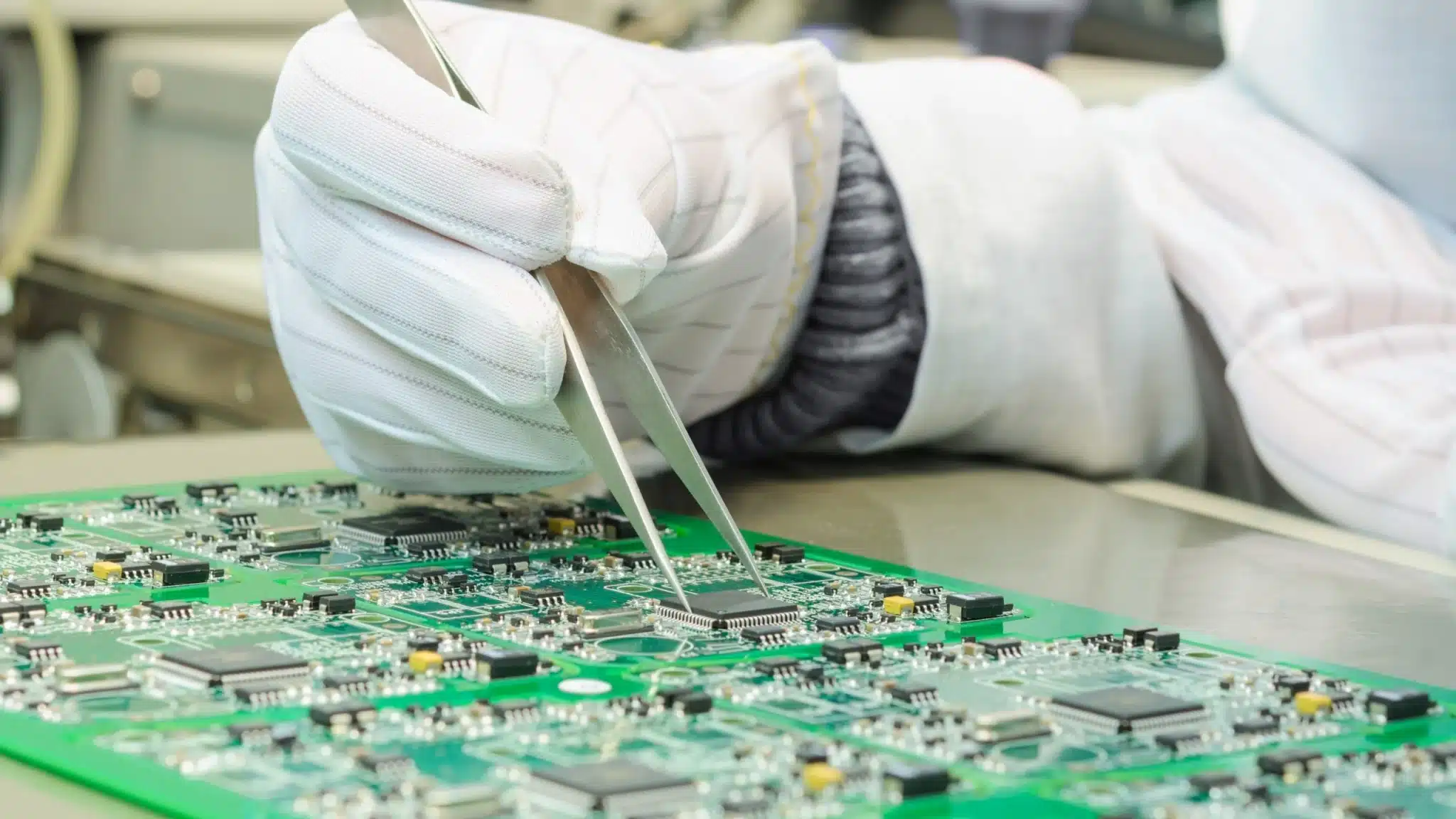
Semiconductor Device Qualification & Reliability Testing Services in the USA
A single semiconductor failure in the field can mean a recall, a safety incident, or a lost customer relationship — which is why qualification can't be a matter of hope. Semiconductor Device Qualification is the methodical, data-driven process of proving that a device will perform reliably across its entire product line, under the full range of operating conditions it will actually face.
Reliability Quality Solutions® brings a reliability-engineering-first approach to semiconductor qualification — not just running tests, but designing test programs that accurately reproduce the real-world stresses your device will encounter, so every performance, reliability, and safety acceptance criterion is confirmed before release.
Semiconductor device qualification is the process of testing and validating semiconductor components — ICs, discrete, MEMS sensors, modules, and passives — to confirm they meet reliability, performance, and industry-standard requirements before being designed into an electronic product. It's not a single test — it's a structured program that layers multiple test types together, each targeting different failure mechanisms (electromigration, oxide breakdown, package degradation, solder joint fatigue) at different stages of the product lifecycle.
Get a Free Qualification ConsultationThe Three Stages of Semiconductor Reliability Testing
Reliability testing isn't one-size-fits-all — the right test depends on where a device sits in its development lifecycle.
1. Intrinsic Reliability Testing
Performed early in process and material development, intrinsic testing uncovers inherent performance and failure issues tied to a device's fabrication process and material structure — allowing design and process adjustments before the product matures. This is where tests like Accelerated Life Testing (ALT) and HTRB are most valuable.
2. Application (Qualification) Testing
Once a device design matures, testing shifts to validating expected performance on representative production samples — confirming the device holds up under real operating conditions without being driven to failure. HTOL is the primary test at this stage.
3. Extrinsic / Quality Assurance Testing
The final stage screens finished, packaged devices for manufacturing-induced defects before shipment — catching issues like weak bond wires or solder joint weaknesses that intrinsic design testing wouldn't reveal. Burn-in and ELFR (Early Life Failure Rate) testing sit here.
Key Semiconductor Reliability Tests We Support
Test: HTOL
High-Temperature Operating Life: Accelerates device aging through electrical and thermal stress near maximum rated operating conditions — typically run for 1,000 hours — to validate long-term operational reliability without driving the device to failure.
Test: HTRB
High-Temperature Reverse Bias: Evaluates long-term stability under high reverse bias and elevated junction temperature, revealing weaknesses in blocking junctions, field depletion structures, and passivation.
Test: HAST
Highly Accelerated Stress Test: Tests device reliability under combined high humidity and high temperature — critical for catching moisture-related failure mechanisms that wouldn't surface under dry thermal testing alone.
Test: TC
Temperature Cycling: Simulates repeated thermal expansion and contraction to assess mechanical stress on packaging, die attach, and solder joints — a key predictor of long-term mechanical reliability.
Test: ESD & Latch-Up Testing
Evaluates a device's resistance to electrostatic discharge events (Human Body Model, Charged Device Model) and its vulnerability to latch-up conditions that can cause catastrophic circuit failure.
Test: Burn-In & ELFR Testing
Burn-in places devices under typical operating stress in a controlled environment to catch early-life ("infant mortality") failures before they reach the field. ELFR quantifies that early failure rate statistically across a production lot.
Test: ALT
Accelerated Life Testing: Stresses devices with elevated thermal, electrical, and (where relevant) RF stimuli to compress years of field aging into a manageable test window, enabling extrapolation of expected device lifetime.
Why Semiconductor Device Qualification Matters
-
Reduce Recalls: Train your products before you ship them instead of after they've left the field.
-
Meet Customer Needs: An increasing number of Tier-1 suppliers and OEMs provide formal qualification to AEC-Q, JEDEC, or MIL-STD as a part of their design-in process.
-
Build Brand Value: Earn trust by showing that you can safeguard your hardware from high-profile failures once it has left your facility.
-
Increase speed to market: Avoid costly redesigns with a structured program that provides clear objectives.
-
Meet Market Needs: In the automotive, aerospace, and medical device markets, qualification is a safety-critical and mandatory need of the market. In all other industries a key differentiator from the competition.
Our Qualification Process
Initial Consultation
We learn about your device, its application, target market, and which standards apply (AEC-Q, JEDEC, MIL-STD, ISO 26262).
Test Plan Development
We design a qualification program covering the right mix of intrinsic, application, and extrinsic reliability tests for your device's lifecycle stage.
Test Execution
Testing is run against defined stress conditions and durations aligned to the applicable standard.
Failure Analysis
Any failures are root-caused to inform design or process corrections.
Qualification Report & Roadmap
You receive a clear, executable report documenting pass/fail results against every acceptance criterion — ready to support customer and regulatory review.
Ongoing Support
We remain available for re-qualification after design changes, process shifts, or new application requirements.
Why Choose Reliability Quality Solutions?
-
Semiconductor Testing Expertise: Our engineers bring decades of real-world experience identifying potential failure modes before testing even begins, not just running standard test sequences.
-
Risk Reduction, Not Failure Response: We're in the business of preventing device failures, not reacting to them after they've already cost you a recall or a warranty claim.
-
Full-Service Support: From test plan development through final report review and analysis, we guide the complete qualification journey.
-
Measurable Benefit: Our clients see reduced warranty claims, higher customer satisfaction, and faster time to market as a direct result of a well-executed qualification program.
-
Integrated Engineering Support: Already working with us on accelerated life testing, DFMEA/PFMEA, or reliability engineering analysis? Your semiconductor qualification program integrates directly with that work instead of sitting with a disconnected third-party lab.
Industries We Serve
Our semiconductor qualification expertise supports device reliability across:
Frequently Asked Questions
What is Semiconductor Device Qualification?
Semiconductor Device Qualification is a process of assessing semiconductor devices to evaluate their reliability and performance as per required specifications for electronic product applications.
Why is qualification of semiconductor devices important?
High reliability and assured performance of electronic systems used in safety-critical segments such as automotive, healthcare, and aerospace is of crucial importance. Failure of these electronic systems in the field may adversely impact safety and defraud large investments made.
What tests are done in the qualification of semiconductor devices?
The qualification of semiconductor devices may include tests for High Temperature/High Humidity storage (HT/HT), High Temperature/High Humidity cycling (HT/HT), High Temperature/High Humidity storage with accelerated testing (HAST), Temperature cycling, ESD and latch-up, burn-in, and extended life failure rate (ELFR) and accelerated life tests (ALT) where each target a different failure mechanism.
What is the difference between HTOL and burn-in testing?
HTOL protects the operation of a device over an extended period (commonly, 1,000 hours) to validate operational reliability. Burn-in is a test that is performed over a much shorter time to screen production devices for defects (infant mortality) before they are shipped.
Do you qualify devices to the AEC-Q100 standard for the automotive industry?
Yes, we carry out qualification programs based on the AEC-Q series of automotive industry standards (AEC-Q100 for ICs, AEC-Q101 for discrete, AEC-Q200 for passives) for automotive-grade semiconductor devices.
How does qualification of semiconductor devices improve product quality?
Qualification of semiconductor devices ensures product quality by stamping out defects earlier, ensuring compliance with relevant industry standards, lowering field failures, and improving the performance and life of a device.
What industries use Semiconductor Device Qualification?
Industries such as automotive, aerospace, telecommunications, consumer electronics, and medical device manufacturing require semiconductor device qualification in order to achieve high reliability and compliance with standards such as AEC-Q, JEDEC, MIL-STD, and ISO 26262.
What standards do you test to?
We develop qualification programs based on AEC-Q100/101/102/103/104/200, JEDEC JESD22 series and JESD47, MIL-STD-883/750, and ISO 26262 according to your device type and the intended application of said device.