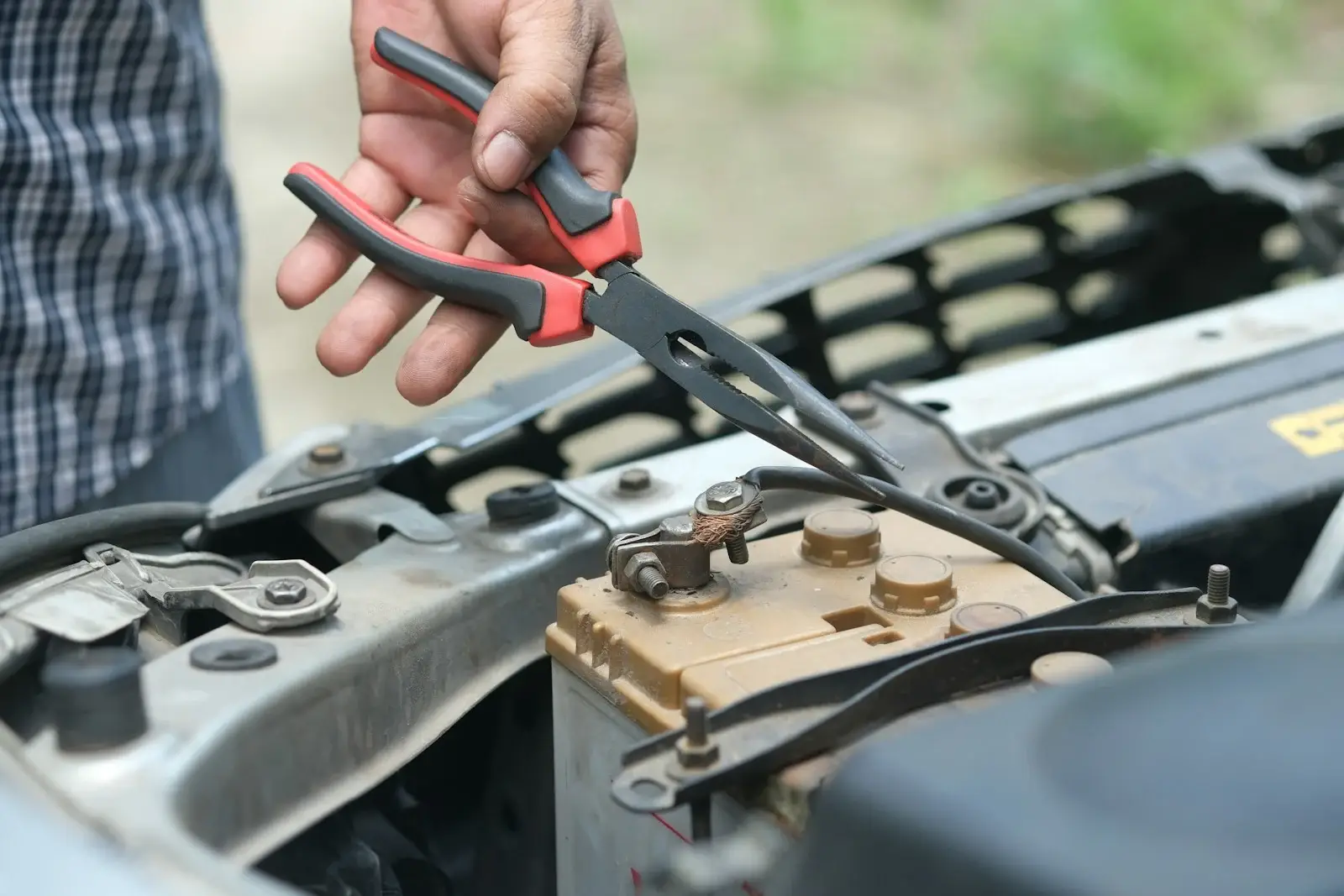
Failure Mode and Effects Analysis (FMEA) Consulting Services
Before building any system, process, or component, considering the risks of system failure is essential. Understanding possible failure results of a product helps a company avoid quality loss and financial burden caused by the negative performance of the system. The RQS team utilizes the Failure Mode Effect Analysis (FMEA) methodology in the identification of potential failure modes that affect a specific product or system to be resolved.
Through our FMEA services, clients perform an evaluation of a given product or system. This includes identification of failure modes, determining the failure impact, and subsequently prioritizing the failure risk using a risk priority number. RQS works with clients to facilitate the modification of product designs and the improvement of the reliability of their products. RQS achieves this by designing systems that prevent the occurrence of repeated failures.
Get StartedWhat Is Failure Mode and Effects Analysis (FMEA)?
Failure Mode and Effects Analysis (FMEA) is a method for engineers to find potential issues within their design. It helps analyse failure modes and the effects they can have. This analysis helps determine how much of a risk a failure mode can have on a system, a system component, within a process, or in a product.
Using FMEA greatly helps Quality and Engineering design teams. They are able to tackle potential issues and limit failures that cause unexpected product issues, loss of service, safety issues, and costly issues to fix. A structured FMEA helps a system's reliability, quality, and performance.
Why Is FMEA Important?
Performing a well-documented FMEA can help your organization to:
- Determine likely failure modes
- Lessen the risks associated with product and process failures
- Construct better product and process designs
- Boost the reliability of products
- Create full document controls for risks
- Minimize defects of products and processes, rework, and scrap
FMEA items are only as valuable as what can be gained by connecting the analysis to engineering and manufacturing decisions.
Our FMEA Methodology
At RQS Engineering, our FMEA methodology is designed to make FMEA a practical engineering tool rather than a documentation exercise.
Understand the Product or Process
We begin by understanding the product architecture, intended function, requirements, manufacturing process, operating environment, and project objectives. This provides the context needed to identify meaningful failure modes.
Identify Potential Failure Modes
We systematically evaluate how components, systems, products, or processes could fail to perform their intended functions.
Identify Failure Effects and Causes
We examine failure mode effects and their underlying causes. Failure mode effects and causes aid in the determination of where risk is likely to exist and where appropriate controls can be employed.
Evaluate and Prioritize Risk
We help teams evaluate the significance of identified risks using appropriate organizational criteria and FMEA methodology. The objective is to distinguish higher-priority risks from lower-priority issues so that resources can be directed toward the areas with the greatest potential impact.
Identify Existing Controls
We evaluate existing prevention and detection controls to determine how effectively potential failures are being prevented or detected.
Develop Recommended Actions
Where risks require additional attention, we help identify practical corrective and preventive actions.
Verify Risk Reduction
Recommended actions should not simply be listed and closed. Their implementation and effectiveness should be evaluated. We help connect FMEA actions with appropriate engineering evidence and risk-management activities.
Maintain and Update the FMEA
FMEA should evolve as the product and process evolve. Design changes, manufacturing changes, supplier changes, field failures, complaints, non-conformances, and reliability data may provide new information that should be considered in the FMEA.
Types of FMEA We Support
Different FMEA applications address different stages of the product lifecycle.
Design FMEA (DFMEA) Consulting
Design FMEA (DFMEA) assesses product, system, or component design failures. DFMEA allows engineering teams to identify issues in the design to coordinate appropriate design controls before the manufacturing process.
Process FMEA (PFMEA) Consulting
Process FMEA (PFMEA) evaluates potential failures associated with manufacturing and production processes.
System FMEA
Design FMEA (DFMEA) captures design element failures. DFMEA allows engineers to find design failures in order to establish the needed design control in the design stage of the manufacturing process.
Manufacturing FMEA
Manufacturing FMEA focuses on risks associated with production processes and manufacturing operations.
FMEA Integrations and Applications
FMEA for Product Design and Development
FMEA is most valuable when introduced early in product design and development. During product development, engineering teams are making decisions about requirements, architecture, materials, components, technologies, and design characteristics. FMEA provides a structured opportunity to ask what could fail before the design is finalized.
FMEA and Risk Management
FMEA is an important tool within a broader risk management process. Risk management provides the overall framework for identifying, evaluating, controlling, and monitoring risks, while FMEA provides a structured method for analysing potential failure modes and their causes and effects.
A typical relationship is: Risk Identification → FMEA → Risk Evaluation → Risk Controls → Verification → Risk Reduction
FMEA for Design Control & Transfer
Effective FMEA can also support design control activities by providing information that may influence design requirements, design outputs, verification, validation, and design changes. Connecting FMEA with design control helps maintain a stronger relationship between identified risks and the engineering activities used to control them.
The transition from product development into manufacturing can introduce new risks. FMEA for design transfer helps organizations evaluate whether product and process risks have been adequately addressed before production.
Manufacturing Risk & Product Reliability
Manufacturing processes can introduce variation that affects product quality and reliability. PFMEA and other manufacturing risk-analysis activities help identify where process failures may occur and where additional controls may be required.
Product reliability depends on the ability of a product to perform its intended function consistently over its expected operating life. FMEA can support reliability engineering by identifying potential failure mechanisms and areas where additional reliability analysis or testing may be appropriate.
Benefits of Performing FMEA
- Identifies weak links before system failure
- Reduces unplanned downtime and maintenance costs
- Improves compliance with ISO, API, and CCPS standards
- Enhances communication across technical teams
- Establishes a continuous improvement framework
By implementing the FMEA process early, clients gain control over risk rather than reacting to it after failure occurs.
Why Reliability Quality Solutions for FMEA Consulting?
Reliability Quality Solutions uses pragmatic, engineering-centric approaches in their FMEA consulting.
Engineering-Focused Approach
Our FMEA work is based on the fundamentals of engineering, reliability, quality, and manufacturing.
Collaborative Consulting & Beyond the Checklist
We work alongside your team. We are not document fabricators. We focus on the important failure modes, and causes and effects, controls, and risk-reduction actions.
Product Lifecycle Perspective
We can integrate FMEA with the various stages of the product life cycle, including design, development, design control, design transfer, manufacturing, and reliability engineering.
Practical Risk Reduction
Our emphasis is on tangible means of reducing risk and improving the performance of products or processes.
Frequently Asked Questions About FMEA Consulting
What does an FMEA consultant do?
An FMEA consultant assists clients in identifying different failure modes and detecting ways to better assess and control potential product/process failures and countermeasures.
What is the difference between DFMEA and PFMEA?
DFMEA is more applicable to the evaluation of design failures, while PFMEA is more applicable to the evaluation of process failures.
Is FMEA part of risk management?
In JMP, FMEA is a tool for identifying a failure mode that evaluates risk in a process.
When should FMEA be performed?
FMEA should be done as early as possible before the process is built, but it can also be done throughout the entire design, manufacturing, and production stages and during changes in the process.
Can FMEA be used to improve product reliability?
Yes. FMEA can identify potential product failure mechanisms and uncover product design weak points to improve product reliability, as well as suggest design controls and failure tests.
Can you review an FMEA?
Yes. Reliability Quality Solutions® can review FMEAs and identify improvement opportunities.
Can FMEA assist in a design transfer?
Yes. Design failures can be identified in the product design, along with manufacturing and process failures, through FMEA, helping teams understand and determine potential production failures before mass production.
Is FMEA suitable for manufacturing only?
No. FMEA can be used in product design, systems, components, manufacturing processes, services, or other areas that require the identification and reduction of risks through failure analysis.